
Myth Check · July 30, 2026 · 5 min · By Aurora Demirci
Myth Check: Does Under-Eye Filler Really Disappear After a Year?
The 6 to 12 month lifespan quoted for hyaluronic acid filler comes from studies on other parts of the face. Imaging research suggests tear trough filler can persist far longer, and that has real consequences for how often you should top up.
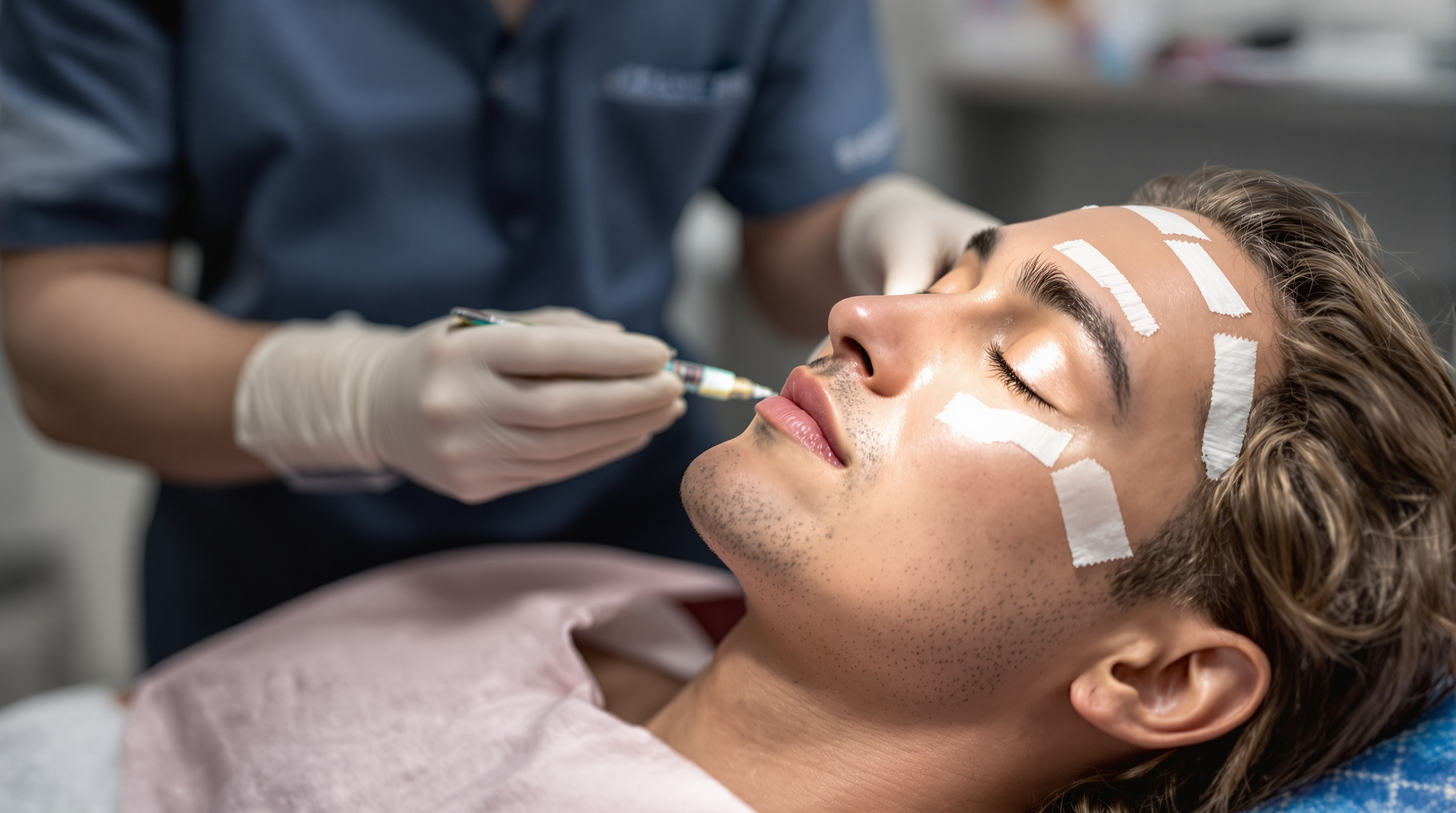
Ask almost anyone considering under-eye filler how long it lasts and you will hear the same answer: six months to a year, then it is gone and you start over. That figure is repeated in consultations, marketing copy, and casual conversation so often that it functions as settled fact. The evidence says otherwise, and the gap between the myth and the biology matters for anyone planning repeat treatments.
Where the 6 to 12 month figure comes from. The original duration data for hyaluronic acid fillers was generated during regulatory approval studies, most of which were performed in the nasolabial folds, the creases running from nose to mouth. Duration in those trials was measured by visual assessment: when did the fold look the way it did before treatment? That is a measure of visible correction, not of whether the gel is physically present. The nasolabial fold is also a high-motion, well-vascularized area where filler is mechanically stressed thousands of times a day by chewing and speaking. The tear trough is nearly the opposite environment.
What imaging actually shows. Over the past several years, radiologists and injectors using MRI have repeatedly identified hyaluronic acid filler in the tear trough and midface years after injection, in some published case series more than five and even ten years later. Patients in these reports frequently believed their filler had fully dissolved. The mechanism is not mysterious. Modern fillers are cross-linked, meaning the hyaluronic acid chains are chemically bonded into a lattice that resists the enzymes that break down the body's own hyaluronic acid within days. The under-eye area compounds this: it has relatively low blood flow, minimal muscle movement compared with the lips or lower face, and cooler tissue temperature, all of which slow enzymatic and mechanical degradation.
There is a second mechanism worth understanding, sometimes called isovolemic degradation. As the cross-linked lattice slowly breaks apart, the remaining fragments become more hydrophilic and pull in more water. The gel can lose mass while maintaining, or even increasing, its volume. This is one reason under-eye filler placed years ago can present as unexplained puffiness rather than as a return of the original hollow.
So why does it seem to wear off? Several things happen in the first months after treatment that patients read as the filler disappearing. Post-injection swelling resolves, which reduces apparent volume. The eye adapts to the new appearance, so the improvement stops registering. And the face keeps aging: fat pads continue to shift, skin continues to thin, and the hollow can partially reappear above or around filler that is still sitting exactly where it was placed. The correction fades. The product often does not.
Why this matters clinically. If a patient returns every 9 to 12 months for a full top-up on the assumption that the previous syringe is gone, filler can accumulate over several cycles. In the thin, unforgiving tissue under the eye, accumulation shows up in predictable ways: chronic puffiness or a shelf-like bulge, a bluish tint known as the Tyndall effect when superficial gel scatters light, and in some cases malar edema, a persistent swelling over the cheekbone caused by filler volume interfering with the delicate lymphatic drainage of the lower lid. These problems are frequently misread as the patient needing more filler, when the correct intervention is often hyaluronidase, the enzyme that dissolves hyaluronic acid, followed by a reset.
What a cautious approach looks like. First, keep baseline photographs from before your first treatment and compare against them, not against your memory, before deciding you need more. Second, treat any recurring hollowness or puffiness as a diagnostic question rather than a refill appointment: an experienced injector should assess whether old product is still present, sometimes with the help of ultrasound, before adding new material on top. Third, expect intervals between under-eye treatments to be measured in years for many patients, not months. If a provider proposes routine annual syringes in this area without reassessing what is already there, that is a reasonable moment to ask more questions.
The bottom line. The claim that under-eye filler reliably vanishes within a year is a myth built on borrowed data from a different part of the face. Cross-linked hyaluronic acid in the low-motion, low-flow environment of the tear trough can persist for years, quietly absorbing water as it degrades. That is not a reason to avoid the treatment, which remains effective for well-selected patients with true volume loss. It is a reason to treat conservatively, reassess before re-treating, and remember that in this area of the face, less product placed less often tends to age better than an annual habit.
Related reading: Surgery vs. filler for the under-eye: choosing right.